
 ₹https://stores.ajmeratyres.com/tyre-shop/-in-nagpur/-in-wadi/ajmera-battery-in-wadi-nagpur--6bRKma/articles/bad-roads-after-rain-heres-how-wheel-alignment-protects-your-vehicle-in-nagpur--d0754b49-3407-48ea-b52e-b49ef27f4f43
Ajmera Battery, Wadi, nagpur
Tyre, Battery, Batteries, Oil & Filters Store in Wadi, Nagpur, Maharashtra
Plot No P-121, MIDC Industrial Area, Hingna Road, Nearby Toll Booth, Wadi, nagpur, maharashtra - 440016
Request A Call Back
Ajmera Battery Social Feeds in Wadi, nagpur
Bad Roads After Rain? Here's How Wheel Alignment Protects Your Vehicle in nagpur
Introduction
Indian monsoon roads are not kind to cars. The rain itself is one problem, but the bigger issue is what the rain does to the road underneath you. Waterlogged streets, hidden potholes, broken edges, and the kind of uneven surfaces that only show themselves after the first heavy downpour all combine to make every monsoon drive a little harder on the vehicle than the dry months ever are. Most drivers focus on tyre pressure and brake performance through the rainy season. Wheel alignment, which is just as important, tends to get quietly overlooked.
Every pothole you hit, every rough patch you bounce through, every speed breaker taken faster than ideal all contribute to gradual misalignment. Left unchecked, that misalignment leads to uneven tyre wear, steering issues, and a slow decline in fuel efficiency that most people only notice when they finally sit down to add up the numbers.
For drivers in Wadi, nagpur, where monsoon road conditions put real stress on vehicles week after week, regular wheel alignment and wheel balancing services are one of the simpler ways to protect your car and keep your everyday driving safe.
This guide walks through what wheel alignment actually is, how monsoon roads quietly affect it, the warning signs that show up before the problems become serious, and why a timely alignment check is genuinely worth scheduling rather than putting off.
What Is Wheel Alignment?
Wheel alignment is the adjustment of your vehicle's suspension system so that all four wheels are positioned to the manufacturer's exact specifications.
The common misconception is that alignment involves doing something to the tyres themselves. It does not. Technicians adjust the specific suspension angles that determine how each tyre meets the road.
Proper alignment delivers:
Optimal tyre contact with the road surface
A stable, predictable steering response
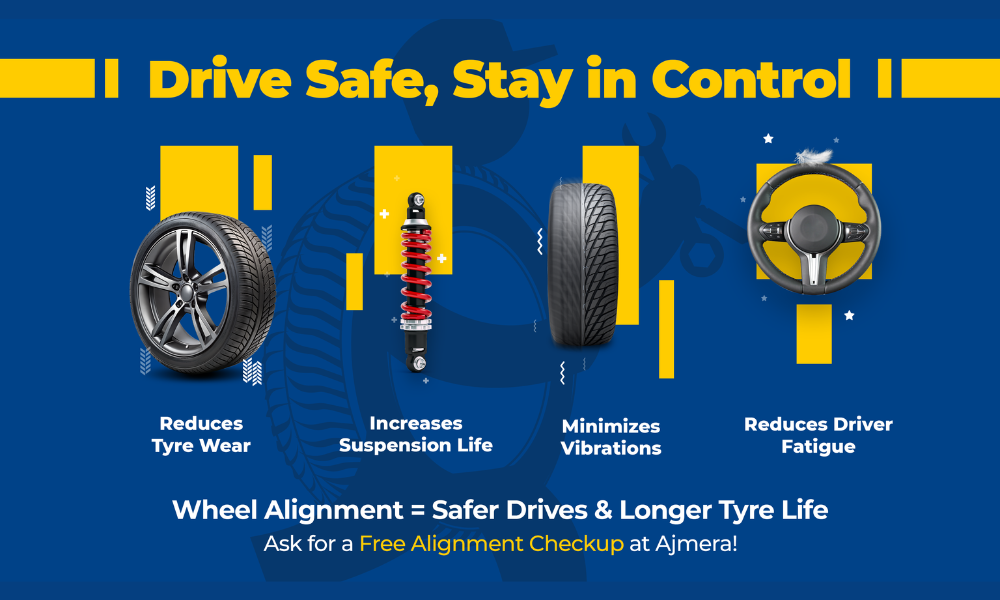
Even tyre wear across all four tyres
Better driving comfort over longer drives
Improved fuel efficiency
When alignment is correct, the car drives straight, handles the way you expect it to, and puts minimal stress on the tyres and the suspension that holds them in place.
Why Wheel Alignment Matters During Monsoon
Monsoon roads create a set of challenges that dry-season driving simply does not.
The rain hides road damage under standing water, which makes it almost impossible to avoid potholes you cannot see. Even one solid impact at the wrong angle is enough to shift suspension geometry and throw your wheels slightly out of alignment.
Poor alignment looks like a minor issue at first, but it adds up fast. The damage from one bad week of driving through unfixed roads can show up months later in worn tyres, drifting steering, and a noticeable drop in how the car drives.
For vehicles regularly driven through nagpur's busy roads and monsoon-affected stretches, periodic alignment inspections are a basic part of preventive maintenance rather than an optional extra.
Common Signs of Wheel Misalignment
Most drivers keep using their cars without noticing that alignment issues are quietly building up. Catching the warning signs early helps avoid expensive tyre replacements and bigger repairs later.
Vehicle Pulling to One Side
The most familiar symptom of wheel misalignment is the car drifting or pulling to one side while you are driving in a straight line.
You may find yourself constantly making small steering corrections just to stay in your lane.
This becomes particularly dangerous on wet roads, where the precise control needed to handle sudden braking or evasive manoeuvres is much harder to achieve with a misaligned car.
Crooked Steering Wheel
When you are driving straight, the steering wheel should sit perfectly centred.
If you notice it sitting at an angle even when the road is straight, that is a clear sign your alignment needs a check.
A crooked steering wheel almost always means the wheel angles have drifted away from where they should be.
Uneven Tyre Wear
Misaligned wheels cause certain parts of the tyre tread to wear out much faster than others.
Common patterns include:
Excessive wear on the inner edges
Excessive wear on the outer edges
Feathered tread surfaces
Irregular wear that does not match the rest of the tyre
Uneven tyre wear shortens tyre life significantly and reduces road grip, which is exactly what you do not want during a wet drive.
Reduced Fuel Efficiency
When the wheels are not aligned properly, the tyres create extra rolling resistance against the road.
The result is that:
The engine has to work harder to maintain speed
Fuel consumption climbs noticeably over weeks
Overall vehicle efficiency drops
A properly aligned vehicle moves with less resistance and runs more efficiently as a result.
How Rain-Damaged Roads Affect Wheel Alignment
Monsoon road conditions are one of the leading reasons cars develop alignment problems in the first place.
Pothole Impacts
Potholes during the rains are practically unavoidable, especially the ones hiding under standing water that you cannot see until you are already in them.
When the car hits a pothole:
The suspension components absorb a significant impact
The wheel angles can shift slightly
The alignment settings get pushed out of spec
Repeated impacts gradually compound the damage. One bad pothole probably will not finish your alignment off completely, but several over a month definitely can.
Uneven Road Surfaces
Rain damages road surfaces continuously through the season, creating dips, cracks, and stretches that look smooth but are not.
Driving on these patches regularly puts extra strain on:
Suspension components
Steering systems
The wheel assemblies themselves
Over time, those stresses affect how the wheels sit and how the car handles.
Sudden Road Obstacles
Monsoon conditions also introduce unexpected hazards:
Broken pavement edges that appear after a flood
Loose debris washed onto the road
Water-filled depressions of unpredictable depth
Even minor impacts contribute to alignment changes, especially when they happen often enough to compound.
Increased Suspension Stress
Your suspension system is constantly working to absorb shocks and keep the tyres in proper contact with the road.
Driving through rough monsoon roads day after day puts extra pressure on suspension components, which raises the risk of alignment-related issues showing up later.
The Relationship Between Wheel Alignment and Suspension Maintenance
Wheel alignment and suspension maintenance are genuinely two sides of the same problem.
The suspension determines where the wheels sit and how they move. If suspension components have worn or been damaged, an alignment adjustment alone will not fix the handling issues fully, because the underlying parts holding the wheels in place are no longer doing their job properly.
Regular suspension inspections identify problems with:
Shock absorbers
Struts
Control arms
Ball joints
Bushings
Keeping the suspension in good shape ensures that whatever alignment work is done actually holds for as long as it should.
Why Wheel Balancing Is Equally Important
While alignment is about the angles at which the wheels sit, wheel balancing is about making sure the weight is distributed evenly across each wheel and tyre assembly.
Improper wheel balancing can cause:
Steering wheel vibrations at certain speeds
Uneven tyre wear (just like misalignment can)
A less comfortable ride overall
Extra strain on suspension components
The two services genuinely belong together. Combining wheel alignment and wheel balancing gives you the best results for tyre lifespan, ride comfort, and vehicle handling.
Benefits of Timely Wheel Alignment
Booking regular alignment service delivers benefits that go further than most drivers expect.
Better Steering Control
Properly aligned wheels make the steering precise and the vehicle predictable.
That precision matters most during monsoon driving, where sudden corrections to avoid obstacles or handle slippery patches happen more often than they ever do in dry weather.
Extended Tyre Life
Uneven tyre wear from poor alignment is one of the most expensive consequences of ignoring the issue.
Correct alignment means tyres wear evenly, and even-wearing tyres last considerably longer. The maths is straightforward.
Improved Safety
A properly aligned car provides:
Better road grip across changing surfaces
Improved stability through corners
More predictable handling overall
Genuinely better control during emergency manoeuvres
All of which matter more when the road is wet.
Enhanced Fuel Economy
Lower rolling resistance lets the engine work less hard for the same speed.
A lot of drivers notice a real improvement in fuel efficiency after sorting out an alignment issue, which makes the service close to self-paying over a few months.
Greater Driving Comfort
Alignment problems usually mean constant small steering corrections, mild vibrations, and a slight underlying instability that you start to feel on longer drives.
Correct alignment removes all of that, improves ride quality, and quietly reduces driver fatigue over longer journeys.
When Should You Schedule a Wheel Alignment Check?
Most service experts recommend a wheel alignment check:
Every 10,000 kilometres as a baseline
After hitting a major pothole or speed breaker hard
Following any suspension repair work
When you install new tyres
Whenever you start noticing steering or tyre wear issues
For cars regularly driven on rough monsoon roads in nagpur, more frequent inspections may genuinely be worth doing.
Why Choose Ajmera Tyres for Wheel Alignment Services in nagpur
At Ajmera Tyres, the impact that bad roads have on vehicles is something the team sees up close all year round, and even more clearly through the monsoon.
The wheel alignment and wheel balancing services are built around optimal vehicle performance, safety, and tyre longevity, regardless of how rough the roads have been recently.
Vehicle care services include:
Computerised wheel alignment
Precision wheel balancing
Tyre inspections
Suspension checks
Tyre replacement services
Complete monsoon vehicle health assessments
The technicians use modern equipment to spot and correct alignment issues before they turn into the kind of expensive repairs that drivers always want to avoid.
Conclusion
Monsoon roads take a real toll on every vehicle that has to use them daily. Hidden potholes, uneven road surfaces, and the cumulative effect of repeated impacts gradually pull your wheels out of alignment, which then shows up as steering problems, uneven tyre wear, dropping fuel efficiency, and a noticeable hit to overall safety.
Regular wheel alignment and wheel balancing services protect your tyres, improve handling, and extend the life of the suspension and steering components that keep everything else working.
If you have recently driven through rough roads, deep potholes, or waterlogged streets in Wadi, nagpur, this is genuinely the right moment to book a professional alignment service. A simple wheel alignment check today is one of the cheapest ways to avoid the much more expensive tyre and repair bills that misalignment leads to over time.