
 ₹https://stores.ajmeratyres.com/tyre-shop/nagpur/wadi/ajmera-battery-in-wadi-nagpur--6bRKma/articles/battery-health-during-monsoon-avoid-unexpected-bre--ef0042cb-c6b1-4e2c-8c0f-3854d05eae7e
Ajmera Battery, Wadi, nagpur
Tyre, Battery, Batteries, Oil & Filters Store in Wadi, Nagpur, Maharashtra
Plot No P-121, MIDC Industrial Area, Hingna Road, Nearby Toll Booth, Wadi, nagpur, maharashtra - 440016
Request A Call Back
Ajmera Battery Social Feeds in Wadi, nagpur
Battery Health During Monsoon: Avoid Unexpected Breakdowns This Rainy Season in nagpur
Introduction
Few vehicle problems feel quite as demoralising as a car that refuses to start in the middle of a monsoon downpour. You are running late, the rain is coming down sideways, and the engine just sits there clicking. Almost without exception, the answer is the car battery.
Most drivers spend their monsoon-readiness time thinking about tyre grip, brake performance, and windshield visibility, all of which matter. The battery, which powers practically everything else the car needs to keep running, somehow gets ignored almost completely until it actually fails.
Your battery is responsible for the ignition, headlights, dashboard electronics, AC system, defoggers, and the small electrical features that quietly hold the whole experience together. A weak or failing battery leaves you stranded exactly when you can least afford it, which during monsoon usually means inside a downpour with traffic backing up behind you.
For drivers in Wadi, nagpur, where monsoon conditions bring increased humidity, water exposure, and challenging road conditions all at once, looking after battery health is a basic part of dependable vehicle performance through the season.
This guide walks through how monsoon weather actually affects your battery, the warning signs most drivers miss, the practical maintenance habits that genuinely extend battery life, and why routine battery checkups are worth doing before the rains arrive rather than after the first failure.
Why Battery Health Matters During Monsoon
Your battery does its work silently, behind the scenes, every single drive. Most drivers do not give it a moment's thought until the day the car suddenly will not start.
During monsoon, the battery faces a particular set of challenges:
High humidity sitting around terminals and wiring
Increased electrical use as more accessories run simultaneously
Direct water exposure on rough monsoon days
Faster corrosion at terminal connections
The constant stop-and-go traffic that monsoon brings to most Indian cities
A healthy battery keeps the car genuinely reliable even when the conditions outside are working against it.
Whether you are commuting through busy roads in nagpur or planning a weekend drive during the rainy season, battery reliability is the difference between a smooth journey and a frustrating one.
How Monsoon Weather Affects Car Batteries
The common assumption is that batteries only suffer in extreme summer heat. Monsoon conditions affect them differently, but the effects are just as real.
Increased Humidity
High humidity is a defining feature of Indian monsoon weather, and it brings moisture into contact with battery components in ways that dry weather simply does not.
Excess moisture can:
Speed up corrosion at terminals
Compromise electrical connections
Reduce charging efficiency
Increase resistance across the electrical system
Over time, these small effects add up to a noticeable drop in overall battery performance.
Corrosion at Battery Terminals
Battery terminals are the physical points where power transfers between the battery and the rest of the vehicle's electrical system.
Monsoon humidity actively encourages corrosion around:
Positive terminals
Negative terminals
The cable connections leading away from both
Corroded terminals usually show up as:
Difficulty starting the vehicle
Intermittent electrical issues that come and go
Reduced charging efficiency overall
Left untreated, the corrosion shortens battery lifespan significantly and creates problems that look like other issues entirely.
Increased Electrical System Strain
Rainy weather pushes drivers to use far more electrical accessories than they would in dry weather.
During monsoon, you are likely running:
Headlights more often, including during daytime
Fog lamps in poor visibility
Windshield wipers continuously
Defoggers to keep visibility clear
Air conditioning to manage cabin humidity
All of those put extra demand on the battery and the charging system together. If the battery is already weak, the added electrical load will expose the underlying performance problems quickly.
Water Exposure Risks
Modern vehicle batteries are designed to handle normal weather conditions, but extended water exposure can still affect the electrical wiring and surrounding components that the battery depends on.
Water intrusion creates electrical faults that may not look like battery problems at first, but can quietly impact overall battery performance and vehicle reliability.
Warning Signs of Battery Problems
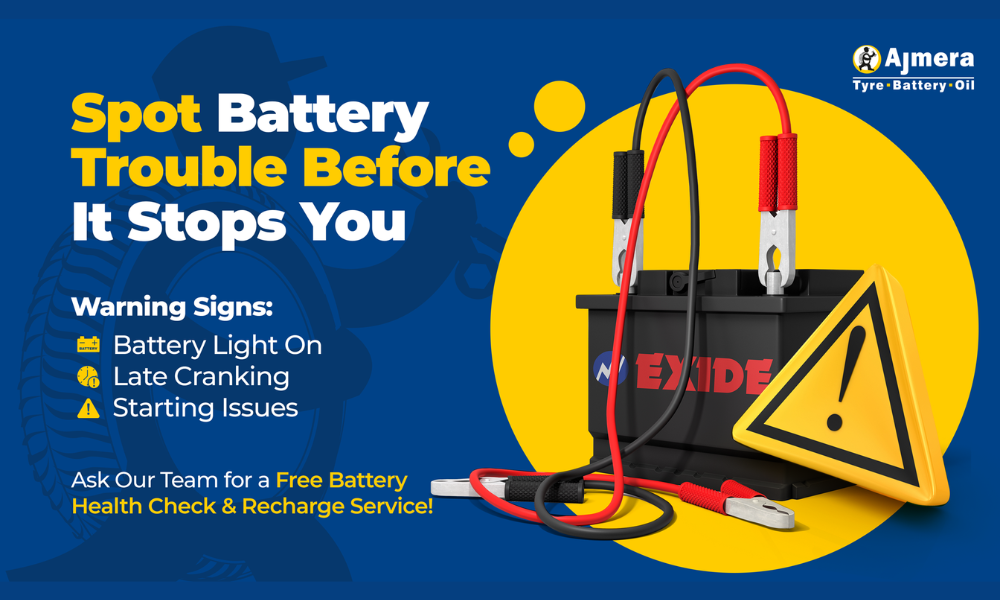
Spotting battery trouble early is what separates a planned battery replacement from a stranded-in-the-rain emergency call.
Slow Engine Cranking
The most familiar early sign of a weak battery is engine cranking that takes longer than it used to.
If your car takes a longer beat than usual to start, or the engine sounds sluggish when turning over, the battery is losing its ability to hold a full charge.
This symptom usually becomes more obvious in humid weather, which is exactly why the issue often surfaces just as monsoon arrives.
Dimming Headlights
Your battery powers the entire lighting system, and lights are usually the first place you notice it weakening.
Look for:
Headlights that look dimmer than they used to
Flickering lights when the engine is at idle
Lights that visibly dim further when you start the engine
These signs point to either battery weakness or charging system trouble, both of which deserve a proper inspection.
Dashboard Warning Lights
Modern vehicles include dedicated battery warning indicators that genuinely do their job.
If you start seeing:
Battery warning lights
Electrical system alerts
Charging system notifications
Get a battery inspection booked soon rather than waiting.
Ignoring dashboard warnings rarely ends well. The lights exist precisely so you can avoid the breakdown they are warning you about.
Frequent Jump Starts
Needing multiple jump starts within a short period is one of the clearest signs that your battery is reaching the end of its useful life.
A jump start is a temporary fix, not a solution. Recurring battery issues should always get a professional look rather than another roadside jump.
Electrical Accessories Malfunctioning
A weak battery affects far more than just the engine. You may notice problems with:
Power windows that struggle or move slowly
Infotainment systems that reset or behave oddly
Cabin lights that dim or flicker
Remote locking systems acting up
Unexplained electrical quirks almost always point back to the battery or the charging system that supports it.
Essential Battery Maintenance Tips During Monsoon
Preventive maintenance does more for battery reliability and lifespan than most drivers realise.
Keep Battery Terminals Clean
Corrosion buildup is one of the easiest things to spot and the easiest to address before it causes real problems.
Look for:
White deposits around the terminals
Greenish corrosion patches
Rust-like buildup on the metal contacts
Cleaning the terminals restores strong electrical connections and gets the battery performing the way it should.
Check Battery Voltage Regularly
Battery voltage testing gives you a clear picture of overall battery health that visual inspection alone cannot.
Routine voltage checks help identify:
Weak batteries that are losing capacity
Charging system problems that may be the underlying cause
Early signs of failure well before the battery dies
Professional battery testing is quick, accurate, and worth doing before monsoon proper begins.
Ensure Secure Battery Mounting
A loose battery vibrates excessively while driving, particularly over the kind of rough monsoon roads that most Indian cities are full of. That vibration genuinely damages internal components over time.
Check the battery mounting brackets occasionally to make sure the battery is sitting firmly in place.
Avoid Unnecessary Electrical Load
Minimise the strain on the battery by switching off:
Cabin lights
Accessories left plugged in
Phone chargers
Infotainment systems
when the engine is not running. Reducing unnecessary draw on the battery genuinely extends its working life.
Schedule Professional Battery Inspections
Professional battery checkups identify hidden issues that visual inspection simply cannot catch.
Technicians can evaluate:
Battery voltage under load
Charging system performance
Terminal condition
Estimated remaining lifespan
Overall electrical system health
Routine inspections are one of the cheapest ways to avoid expensive surprises during monsoon travel.
Why Preventive Battery Checks Matter
Battery failures rarely give you a polite warning before they happen.
A battery that seemed fine yesterday can fail today, and monsoon weather is the most common time for the unexpected failure to actually occur. The added humidity, electrical load, and water exposure all push a marginal battery over the edge faster than dry conditions would.
Routine battery inspections catch issues like:
Weak cells that are no longer holding charge properly
Corrosion buildup that is restricting electrical flow
Charging inefficiencies in the alternator or related parts
Reduced overall battery capacity
Potential electrical faults developing in surrounding components
Catching these problems early means dealing with them in a workshop rather than on the side of a flooded road.
Preventive maintenance does not just improve reliability. It extends battery lifespan and reduces the long-term cost of running the vehicle.
When Should You Consider Battery Replacement?
Most vehicle batteries last roughly three to five years, depending on usage, driving conditions, and how carefully they have been looked after.
Consider battery replacement if:
The battery is more than three years old and starting to show its age
Starting problems are happening regularly
Voltage readings are consistently lower than they should be
Corrosion has become excessive and keeps returning after cleaning
Electrical performance across the car has been gradually deteriorating
Replacing a weak battery before monsoon is a far better idea than dealing with a failed one during it.
Why Choose Ajmera Tyres for Battery Checkups in nagpur
A battery that fails at the wrong moment can turn a routine drive into a serious headache. At Ajmera Tyres, battery checks are treated as the serious preventive work they actually are, particularly heading into the monsoon season.
Vehicle care services include:
Professional battery checkups
Battery health assessments
Electrical system inspections
Vehicle safety checks
Tyre inspections
Wheel alignment and balancing
Monsoon readiness evaluations
The experienced technicians work to spot battery issues early, well before they leave you stranded somewhere you would rather not be.
Conclusion
Your vehicle's battery is one of the most important yet most underestimated components in monsoon preparation. Increased humidity, rising corrosion risks, and the higher electrical demands of rainy driving all combine to push battery performance harder than usual, which is exactly why unexpected breakdowns spike during the rains.
Paying attention to the warning signs, slow engine cranking, dim headlights, dashboard alerts, and the need for frequent jump starts, lets you deal with battery issues on your own terms rather than on the side of a wet road.
For drivers in Wadi, nagpur, regular battery checkups and basic preventive maintenance keep the car genuinely dependable through the season. Booking a professional battery inspection before the rains arrive is genuinely worth doing rather than waiting for a dead battery to make the decision for you.